Rolling Mill

The rolling process is the core of the whole rolling process. It is the product that the user needs to complete the deformation process by rolling the blank. The rolling process plays a decisive role in product quality.
The quality of rolled products includes geometry, dimensional accuracy, internal structure, process mechanical properties, and surface finish. Therefore, the rolling process must formulate the corresponding rolling process technical procedures and process management system according to the requirements of product technical standards or technical requirements, product characteristics, production technology, equipment capacity, production costs, and labor conditions of workers. In order to ensure the rolling product quality and technical and economic indicators to achieve optimization.
The rolling process is generally composed of one (Group) or two (Group) roughing mills, medium rolling mills, and finishing mills. It has the functions of billet section compression, semi-finished product rolling deformation, and finished product rolling. The pass of the finished rolling mill or finishing rolling pass is K1 hole, the pass of the finished front rolling mill is K2 hole, the pass of the finished front rolling mill is K3 hole, and so on.
Continuous Rolling Mill and Continuous Rolling Constant
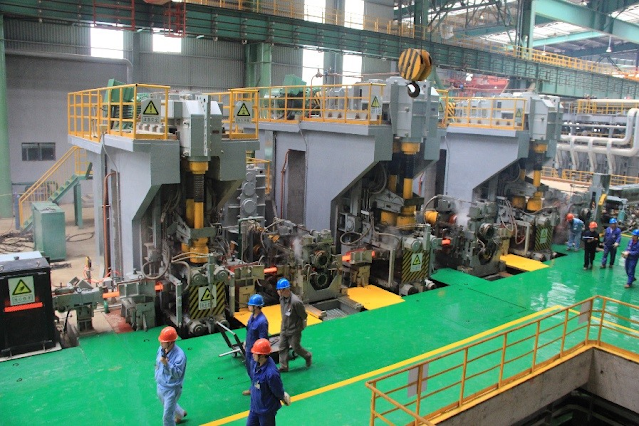
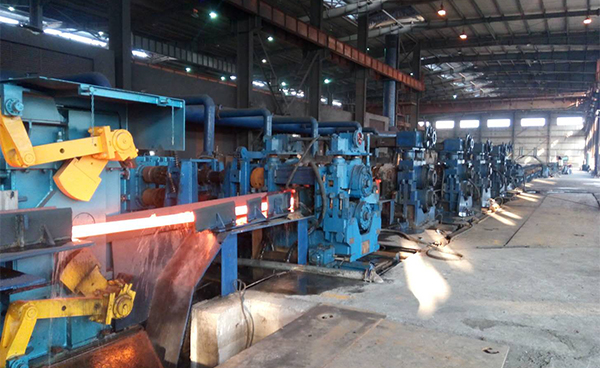
Continuous rolling mill refers to the rolling mode in which several rolling stands are arranged in a row according to the rolling direction, the rolled pieces are deformed in several rolling mills at the same time, and the rolling speed of each stand increases with the increase of the length of the rolled piece, and the second flow of metal in each rolling mill is equal or there is slight stacking and pulling relationship. The continuous rolling mill has high mechanization, automation, rolling speed, and rolling accuracy, so it has high labor productivity and excellent product quality, which is the direction of bar and wire mill transformation and new construction. It is called continuous rolling when the rolling piece passes through the rolling mill with equal volume in unit time.
Continuous rolling constant = f1d1n1 = f2d2n2 = f3d3n3 = fndnn, where: F - section area of rolling piece mm2 D - working diameter of roll mm n - number of roll revolutions (1 / min).





评论
发表评论